Green Card
What Evidence Is Needed for a Marriage-Based Green Card?
By Andressa Meerbott7 min read
A marriage certificate proves that a marriage legally took place. It doesn't, by itself, prove that the couple married to build a life together.
In a marriage-based green card case, the government typically looks at several separate questions. Is the petitioner a U.S. citizen or lawful permanent resident? Is the marriage legally valid? Were all prior marriages properly terminated? Is the current marriage genuine rather than one entered into primarily for an immigration benefit? And does the applicant meet the requirements for adjustment of status or consular processing?
The evidence should answer those questions clearly and consistently. Every couple's records will look different, but the filing should present an honest picture of the relationship.
Evidence of the Petitioner's Status
The spouse filing Form I-130 must prove that they are eligible to petition for the intending immigrant. Depending on the petitioner's status, this may include a copy of a U.S. birth certificate or Permanent Resident Card.
Spouses of U.S. citizens are classified as immediate relatives, while spouses of permanent residents are generally subject to visa availability in the family-preference system. Filing strategy also depends on the applicant's immigration history.
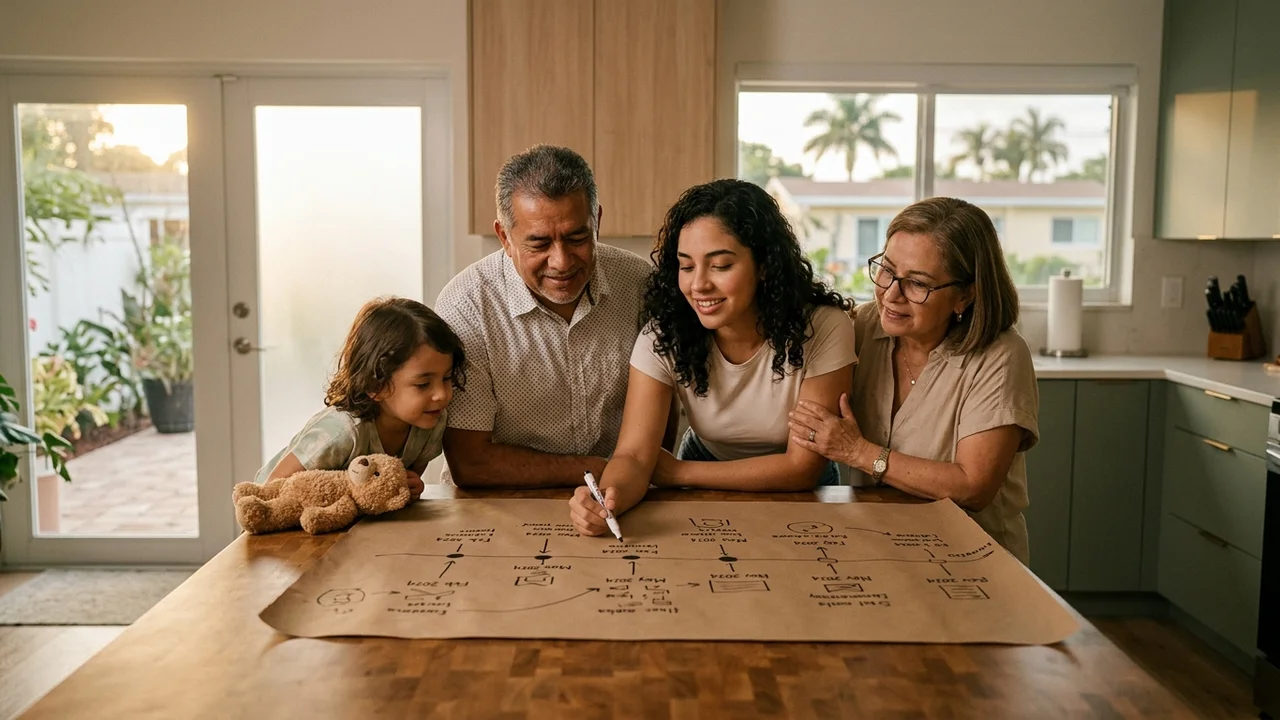
Spouses of U.S. citizens are classified as immediate relatives, while spouses of permanent residents are generally subject to visa availability in the family-preference system. When deciding how to sponsor a spouse for a green card in Florida, the couple must also consider where the applicant lives, whether adjustment of status is available, and the applicant's immigration history.
Proof of a Legally Valid Marriage
The couple normally submits a civil marriage certificate issued by the government where the marriage occurred. A religious certificate or ceremonial record may be meaningful to the couple, but it may not replace the official civil record.
For a marriage outside the United States, the certificate must meet the document requirements for that country.
If either spouse was previously married, include proof that every earlier marriage legally ended.
USCIS will also need evidence of legal name changes when the names on passports, birth certificates, prior filings, and the marriage certificate don't match.
Evidence That the Marriage Is Genuine
USCIS refers to a genuine marriage as a “bona fide” marriage. The central question is whether the couple intended to establish a life together when they married, not whether their relationship looks exactly like someone else's.
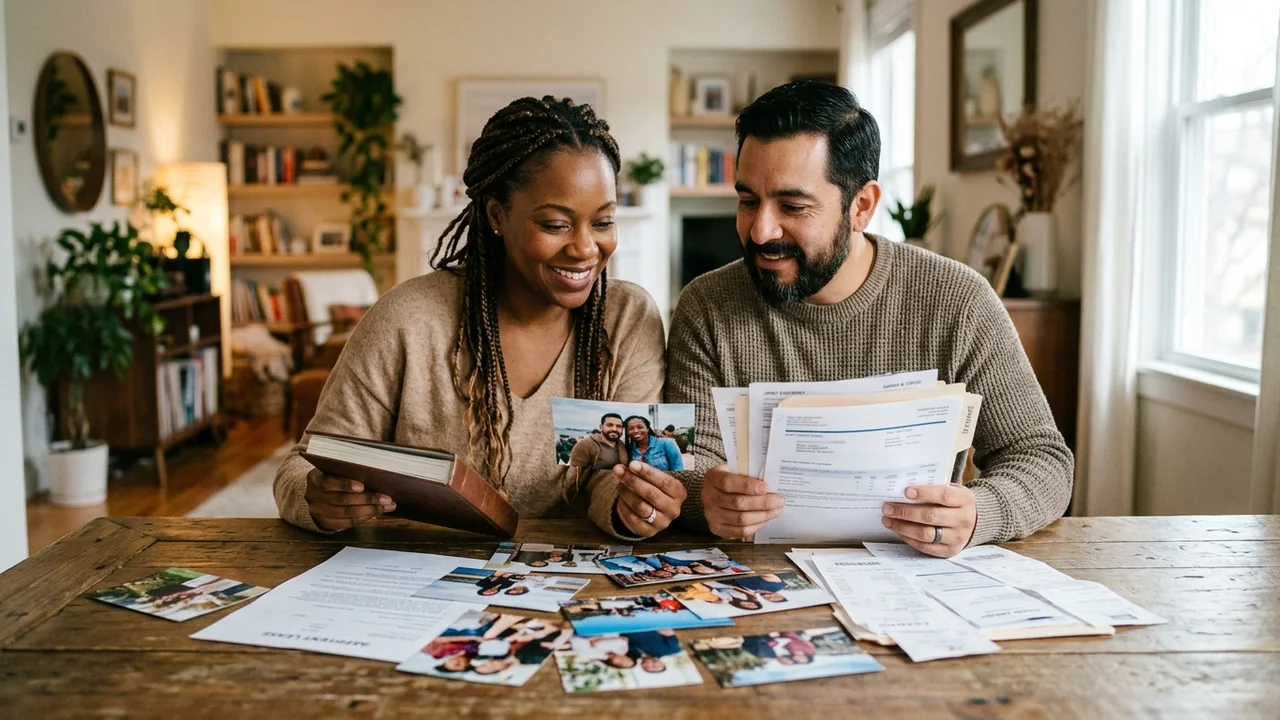
USCIS identifies several common types of bona fide marriage evidence, including joint property, a shared lease, combined finances, birth certificates of children born to the couple, third-party affidavits, and other records showing an ongoing marital union. No single item guarantees approval, and one missing category doesn't automatically mean the marriage isn't real.
The evidence used to prove a bona fide marriage for a marriage-based green card application can come from several parts of the couple's life. The strongest submissions usually combine records from more than one category.
Evidence of a Shared Life
Useful evidence may come from several parts of the couple's life, including:
- A shared home: A lease, mortgage, deed, utility bill, insurance policy, identification, or mail showing both spouses at the same address.
- Shared finances: Joint accounts, tax returns, credit cards, loans, major purchases, money transfers, or household expenses paid by both spouses.
- Insurance and benefits: Health or life insurance, employment benefits, retirement beneficiaries, wills, or emergency-contact records naming the other spouse.
- Children and family life: Birth certificates, school or medical records, family photographs, invitations, holiday cards, or evidence of attending important events together.
- Travel and communication: Trip records, photographs from different stages of the relationship, and a reasonable sample of messages or calls, particularly during periods of separation.
- Statements from others: Affidavits from relatives or friends describing specific experiences they have shared with the couple.
The records should reflect the couple's real circumstances. Couples who keep finances separate or don't have a lease in both names can provide other evidence and explain the arrangement honestly.
What If the Couple Has Limited Joint Evidence?
Newly married couples may not have years of records. Other couples live apart because of military service, school, work, caregiving responsibilities, visa delays, or immigration detention. Some live with relatives and don't have a lease. Others can't open joint accounts because one spouse lacks a Social Security number.
The couple should submit what naturally exists and explain unusual circumstances clearly.
For example, a long-distance couple may rely more heavily on travel records, communication history, money transfers, wedding planning, and evidence of plans to live together. A couple living with relatives may include mail sent to both spouses at the home, an affidavit from the homeowner, and records showing contributions to household expenses.
The goal is to help the officer understand the reality of the couple’s relationship and the available records.
Evidence for the Green Card Applicant
In addition to proving the marriage, the applicant must document identity and eligibility for the green card process. The required evidence depends on whether the person applies from inside the United States or completes consular processing abroad.
For an adjustment-of-status case, common documents may include:
- A birth certificate
- Passport identity and visa pages
- Form I-94 and admission stamp
- Government-issued identification
- Records of current or previous immigration status
- Certified criminal dispositions, when applicable
- Two passport-style photographs when required
- A completed medical examination on Form I-693
USCIS currently instructs adjustment applicants who are required to submit Form I-693 to include it with Form I-485 in the sealed envelope provided by the civil surgeon. Applicants should check the current Form I-485 instructions and filing requirements before submitting the package.
For consular processing, the National Visa Center and U.S. embassy or consulate may request civil documents such as birth, marriage, divorce, police, court, military, and passport records. The exact document format and availability rules depend on the country. Applicants should follow the instructions issued for their case and interview location.
Financial Sponsorship Evidence
Most marriage-based immigrants require a Form I-864, Affidavit of Support. The petitioning spouse normally must submit the form even when a joint sponsor is used.
Financial evidence may include:
- The sponsor's most recent federal income tax return or IRS tax transcript
- W-2s or 1099s when applicable
- Recent pay statements
- An employment verification letter
- Proof of qualifying assets, if assets are relied upon
- Proof of the sponsor's U.S. citizenship or permanent residence
- Evidence of U.S. domicile
If the petitioner's income isn't sufficient, the case may require evidence from a joint sponsor or qualifying household member. A household member who contributes income may need Form I-864A.
The financial-sponsorship evidence is separate from evidence that the marriage is genuine. A joint bank account may be relevant to the relationship, but it doesn't replace the income and tax records required for Form I-864.
Translations, Copies, and Document Quality
Any foreign-language document submitted to USCIS must include a complete English translation with the translator's certification that the translation is complete and accurate and that the translator is competent to translate.
Use clear, readable copies unless the instructions request an original. Include the front and back of cards or documents when both sides contain information. Don't crop out seals, annotations, receipt numbers, or page numbers.
Consistency Matters as Much as Volume
USCIS reviews the forms, documents, prior immigration records, and interview answers together. Dates and facts should be consistent across the filing.
Before submitting, review details such as:
- When and where the couple met
- When the relationship became serious
- Current and former addresses
- Prior marriages and divorces
- Employment history
- International travel
- Children's information
- Arrests or immigration violations
An honest mistake doesn't necessarily mean fraud, but unexplained inconsistencies can lead to questions, a Request for Evidence, an interview, or a denial.
Reviewing common marriage-based green card interview questions can help couples identify details they may need to clarify before the interview. The goal isn't to memorize matching answers. It's to understand the process and answer truthfully from personal experience.
Keep Collecting Evidence After Filing
The relationship continues while the case is pending. Save updated leases, tax returns, insurance policies, account statements, travel records, and photographs. Bring relevant updated evidence to the interview if one is scheduled.
If permanent residence is granted before the couple's second wedding anniversary, the immigrant will generally receive conditional permanent resident status for two years. The couple will usually need to present updated evidence again when requesting removal of conditions through Form I-751.
Building an organized record over time is much easier than trying to reconstruct two years of shared life shortly before a deadline.
Frequently Asked Questions
How many photos should a couple submit?
There is no required number that proves a marriage. Choose a reasonable collection that shows the relationship over time, different settings, and interaction with important people in the couple's life.
Is a joint bank account required?
No single document is mandatory in every relationship. If the couple doesn't share a bank account, other evidence and a truthful explanation may show how they manage their household and finances.
Should the couple submit private messages?
Messages may be useful, especially for long-distance relationships, but the couple can select representative portions rather than submitting every conversation.
Can USCIS ask for more evidence?
Yes. USCIS may issue a Request for Evidence, schedule an interview, or take other steps when the initial record doesn't establish eligibility. Because USCIS may decide a case based on the evidence initially submitted, the filing should be complete and well organized from the beginning.
Present the Relationship Clearly and Honestly
The best evidence package isn't necessarily the thickest. It is the one that proves the legal requirements, reflects the couple's actual life, and makes the history easy to understand.
Every marriage looks different. A thoughtful filing connects the documents to the couple's circumstances without forcing the relationship into a standard checklist.
Our team can help organize and prepare your evidence so it clearly reflects the context of your relationship and life together. Contact 360 Immigration Law Group to request a free initial case evaluation.