Immigration
Immigration Documents You Should Never Lose
By Andressa Meerbott6 min read
Immigration paperwork accumulates over time. Some documents may look outdated once a case is approved or a new card arrives.
That doesn't mean they're no longer important.
An old notice may contain a receipt number. A previous passport may show when and how someone entered the United States. A court order may prove how removal proceedings ended. Replacing these records can take time, cost money, or require a formal request.
The safest approach is to keep a complete immigration file, even after a case appears finished. Here are the documents that deserve special attention and a practical system for protecting them.
Passports, Visas, Entry Stamps, and Form I-94
Keep every passport used for travel to the United States, including expired passports. The visa, entry stamps, and biographical pages may help establish:
- The date and place of an entry
- The visa category presented at the border
- A person's travel history
- Whether the entry was inspected
A visa and an I-94 serve different purposes. A visa generally allows a person to seek admission at a U.S. port of entry. The Form I-94 records the admission and usually shows the class of admission and the authorized period of stay.
Most I-94 records are now electronic. Travelers can retrieve their most recent record through the official CBP I-94 website. Download and save a copy after each entry instead of assuming it will always be easy to retrieve later. If the record can't be found online, CBP recommends checking that the information matches the travel document used for admission. A records request may be necessary if the problem can't be resolved.
The State Department recommends copying the passport biographical page, visa, admission stamp, and any paper I-94. Report a lost or stolen passport or visa through the proper consular and government channels, and keep proof of the report.
Green Cards and Employment Authorization Documents
A Permanent Resident Card, commonly called a green card, is important evidence of lawful permanent resident status. An Employment Authorization Document, or EAD, shows employment authorization for a specific period and category.
Keep copies of the front and back of every card, not only the current one. Older cards may contain an A-Number, category code, validity dates, or prior name that becomes relevant later.
If a green card is lost, stolen, or damaged, a permanent resident generally requests a replacement using Form I-90. If an EAD is lost, stolen, or destroyed, USCIS generally requires a new Form I-765 requesting a replacement. The correct filing process, fee, and supporting documents depend on the circumstances and eligibility category.
A copy won't always substitute for the physical card, but it can provide the information needed for a replacement request.
Naturalization and Citizenship Certificates
A Certificate of Naturalization or Certificate of Citizenship is more than a keepsake. It can be used as evidence of U.S. citizenship when applying for a passport, sponsoring certain relatives, or addressing questions about citizenship.
Store the original securely and make high-quality color copies for your records. Don't laminate the original or carry it routinely unless there's a specific reason to do so.
USCIS allows eligible individuals to request a replacement naturalization or citizenship document by filing Form N-565. Replacement may take time, so protecting the original can prevent delays when citizenship evidence is needed.
Parents should preserve records showing how a child acquired or derived citizenship, including birth, citizenship, marriage, and custody documents.
USCIS Receipt, Approval, and Other Notices
Keep every Form I-797 notice and letter that USCIS sends. This includes:
- Receipt notices
- Approval notices
- Transfer notices
- Reopening or reconsideration notices
- Biometrics notices
- Interview notices
- Requests for Evidence
- Notices of Intent to Deny or Revoke
A receipt notice confirms USCIS accepted a filing and contains the number used to track the case. An approval notice may include details that don't appear on the card, and some receipt notices may also document a temporary extension when presented with an expired document.
Don't discard a notice because an appointment passed or the application was approved. Save every page and any envelope showing the mailing date.
Importantly, an old notice may contain a receipt date, priority date, or approval date that could be important when determining eligibility under the Child Status Protection Act (CSPA).
If the case is connected to a USCIS online account, download available notices from the Documents section. The online account is useful, but it shouldn't be the only place where records are kept.
Immigration Court and BIA Documents
Anyone who has been in removal proceedings should preserve the entire court file. Particularly important documents include:
- The Notice to Appear
- Hearing notices
- Pleadings and applications for relief
- Evidence filed by either side
- Immigration judge decisions and orders
- Bond orders
- Appeal filings
- Decisions from the Board of Immigration Appeals
A court order can affect future applications, travel, detention, and whether an outstanding removal order exists. Keep a signed or stamped copy when available.
EOIR's online system provides basic updates, but court documents remain the official source of hearing information. Eligible parties may request a missing Record of Proceeding from the immigration court or BIA.
Civil and Criminal Records Used in the Case
Immigration filings often rely on documents issued by state, local, or foreign authorities. Keep certified copies when possible, including:
- Birth, marriage, divorce, and death certificates
- Adoption and custody orders
- Legal name-change records
- Police reports and certified criminal dispositions
- Sentencing and probation records
- Expungement or sealing orders
- Military records
Even a dismissed arrest may need to be disclosed later. A certified disposition shows how the case ended. Keep foreign-language records with their translations and translator certifications.
Evidence of Status, Extensions, and Pending Protection
Some people don't have one card that tells their entire immigration story. Their current situation may depend on several documents read together, such as an expired card, a receipt notice, an approval notice, or proof of a pending application.
Preserve any records showing:
- A pending asylum, VAWA, T visa, or U visa matter
- Temporary Protected Status
- Parole or advance parole
- An extension or change of nonimmigrant status
- Deferred action
- A pending adjustment-of-status application
- A stay of removal or order reopening proceedings
These records may be needed for employment, driver's license matters, travel, or later filings. Because a notice's effect depends on its language and the person's circumstances, don't rely only on a verbal explanation.
How to Store Immigration Records Safely
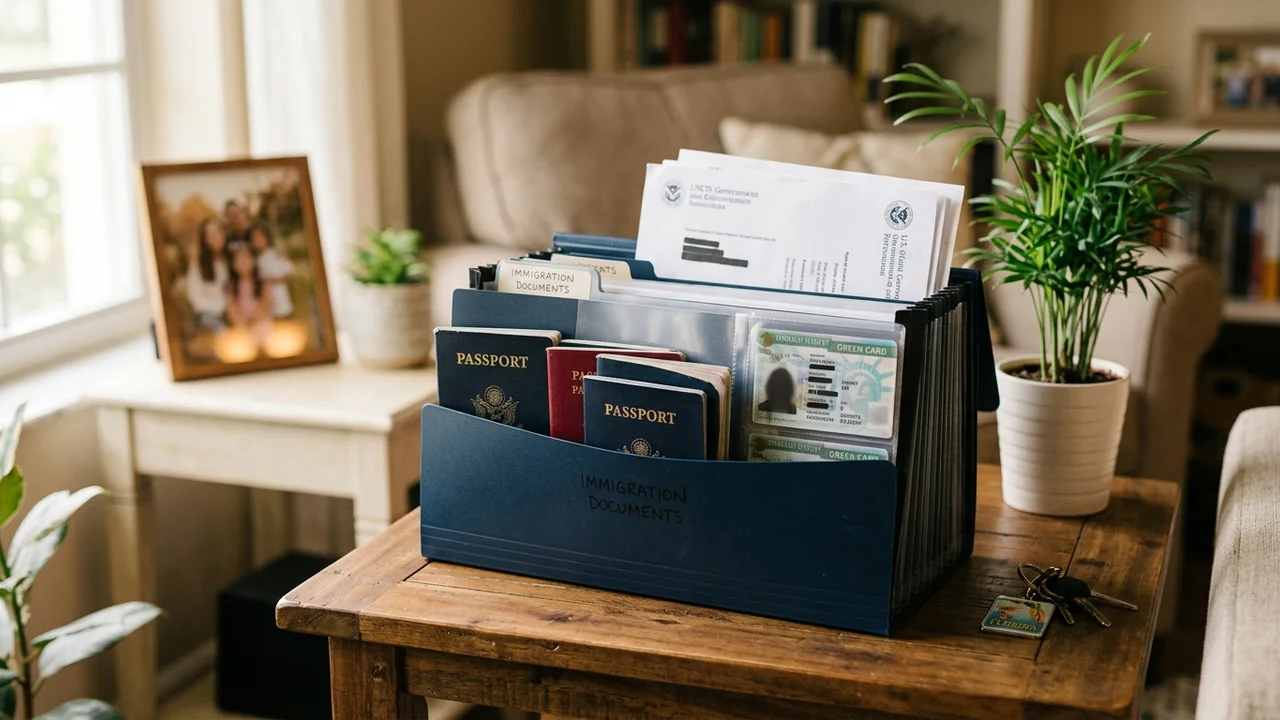
Use both physical and digital storage. A simple system works better than a complicated one that no one maintains.
For paper records:
- Keep originals in a waterproof and fire-resistant container.
- Separate irreplaceable originals from everyday copies.
- Organize notices by agency and date.
- Avoid writing notes directly on original government documents.
For digital records:
- Scan every page in color and make sure names, numbers, stamps, and signatures are readable.
- Protect cloud accounts with a strong password and multifactor authentication.
- Share sensitive records only through secure methods.
Give a trusted person instructions for emergency access. Don't keep the only copies on a phone, in an inbox, or an old laptop.
What to Do When a Document Is Missing
Act promptly and identify exactly what is missing. The response depends on whether it was lost, stolen, damaged, or never delivered.
Useful steps may include:
- Check USCIS, CBP, or EOIR online systems for downloadable records.
- Contact the attorney or representative who handled the filing.
- Report stolen identity or travel documents to the proper authorities.
- Request a replacement card or certificate using the correct form.
- Request the relevant government file through an available record process or FOIA.
- Keep proof of every report, request, payment, and delivery.
Don't file based on assumptions. A card that never arrived may require different steps from one lost after delivery. Check current agency instructions before requesting a replacement.
Build the File Before You Need It
Immigration records often become most important during a deadline, interview, arrest, emergency, or international trip. That isn't the time to discover an original is missing.
Set aside time to organize the file now. Keep prior passports, entry records, cards, government notices, court decisions, filed applications, and supporting evidence even when they appear outdated. A well-maintained record can make it easier to understand immigration history, prepare future filings, and respond when the government asks for proof.
If you're unsure which records matter or need guidance after losing an immigration document, contact 360 Immigration Law Group to request a free initial case evaluation.