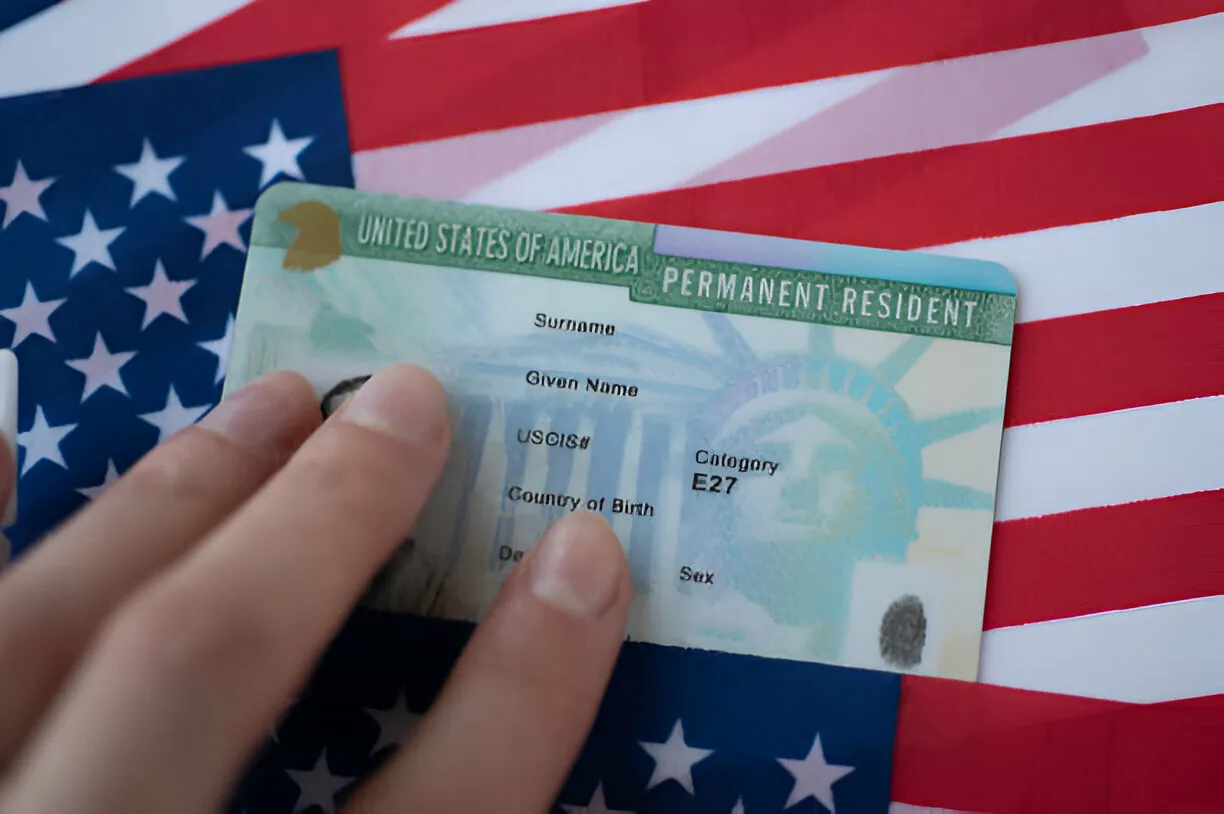

Green Card
How Family Sponsorship Works in the United States
By Andressa Meerbott11 min read
Summary: Family sponsorship immigration allows U.S. citizens and green card holders to petition for certain relatives to join them permanently. This guide covers who qualifies, how the categories differ, and what the process actually looks like.
Key Takeaways
- Family sponsorship immigration is the largest pathway to a green card, accounting for roughly six in ten new permanent residents.
- U.S. citizens may petition for more relatives than green card holders may.
- Immediate relatives of citizens face no annual cap and no wait for a visa number.
- Everyone else falls into preference categories with hard yearly limits and long waiting lines.
- The petition is only the first step. Approval establishes the relationship, not the right to enter.
- Sponsors sign a legally binding affidavit of support that lasts for years.
- Abused spouses and children may self-petition without the abuser's knowledge or cooperation.
You became a citizen this year. Your mother is still back home, and every phone call ends the same way, with both of you doing math about how long it might take.
The honest answer depends entirely on which category she falls into. As of March 2026, the State Department was still processing some family-sponsored applications filed in April 2001, according to the Migration Policy Institute. Twenty-five years in line.
Your mother, though, would not wait that long. Parents of adult citizens sit in a category with no annual limit at all, and understanding that difference before you file changes everything about what comes next.
In this post:
- Who may sponsor a relative, and how citizenship changes what is possible
- Why some relatives wait months and others wait decades
- How the petition, the visa, and the green card fit together
- What sponsors take on financially when they sign
What Family Sponsorship Immigration Means
Family-sponsored immigration is the process by which a U.S. citizen or lawful permanent resident files a petition asking the government to recognize a family relationship. That petition opens a path for the relative to receive an immigrant visa and eventually a green card.
The petition alone does not grant status. It establishes that the relationship is real and qualifying, which is the first step, not the finish line.
Two Tracks, Very Different Timelines
Every family-based case falls into one of two tracks. Immediate relatives of U.S. citizens have an unlimited number of visas available, so no one waits in line for a number.
Everyone else enters a preference category with a limited number of visas each year. That single distinction explains why one family reunites in a year, and another waits two decades.
Who May Sponsor a Family Member
Not everyone may file a petition, and not everyone qualifies as a beneficiary. Your own status decides both.
The rules are narrower than most people expect. A cousin, a grandparent, an aunt, or an in-law does not qualify under any category, no matter how close the relationship is in practice.
Citizens and Green Card Holders
A U.S. citizen who is at least 21 may petition for a spouse, a child of any age, a parent, or a sibling. Younger citizens may still petition for a spouse or a child, but not for a parent or a sibling.
Green card holders have a shorter list. A lawful permanent resident may petition only for a spouse or an unmarried child, whether that child is under 21 or older.
What Changes When a Sponsor Naturalizes
Naturalizing often moves a pending case forward. When a green card holder becomes a citizen, a spouse or minor child generally shifts from a preference category into the immediate relative group, which removes the wait for a visa number entirely.
The effect is not always positive. An unmarried adult child in F2B converts to F1, which may sometimes move more slowly depending on the country, so this is worth reviewing before you file anything.
Immediate Relative Visas Have No Annual Cap
This is the fastest track for family-sponsored immigration, and the reason is simple. Congress placed no yearly limit on immediate relative visas, so an unlimited number are available every year.
Three groups qualify as immediate relatives of a U.S. citizen. A spouse, an unmarried child under 21, and a parent, provided the citizen is at least 21 years old.
Why No Waiting Line Exists Here
There is no priority date to watch and no visa bulletin to check. Once the petition is approved, the case moves straight to the next stage.
The remaining wait is administrative rather than numerical. Processing takes time, but nobody in this group is waiting for a visa number to become available.
When a Child Turns 21
Age matters more here than families expect. An unmarried child who turns 21 before the case concludes generally moves out of the immediate relative group and into a preference category, where the wait begins.
Protections exist for some cases. The Child Status Protection Act may freeze a beneficiary's age in certain circumstances, so it's worth reviewing early rather than discovering it after a birthday passes.
Family Preference Visas and the Waiting Line
Everyone who is not an immediate relative enters the preference system. These family preference visas carry annual limits, so a beneficiary joins a line and waits for a visa number.
Four categories exist, each with its own allocation. Where a relative lands depends on the sponsor's status and the relative's age and marital status.
| Category | Who it covers | Annual limit |
|---|---|---|
| F1 | Unmarried sons and daughters, 21 or older, of U.S. citizens | 23,400 |
| F2A | Spouses and unmarried children under 21 of green card holders | 77% of 114,200 |
| F2B | Unmarried sons and daughters, 21 or older, of green card holders | 23% of 114,200 |
| F3 | Married children of U.S. citizens | 23,400 |
| F4 | Siblings of U.S. citizens who are 21 or older | 65,000 |
People Eligible in Each Category
Marital status moves a beneficiary between categories. An unmarried adult child of a citizen is in F1, and marriage shifts that same person to F3, where the line is longer.
Divorce shifts it back. These changes happen automatically when the government learns of them, so notify your attorney before a wedding rather than after.
Why the Line Is So Long
Demand far exceeds supply. At the close of the last fiscal year, roughly 2.36 million I-130 petitions were pending with USCIS, and about two-thirds of those were preference cases.
Country of birth compounds it. No single country may account for more than 7% of the annual total, so relatives born in Mexico, the Philippines, India, or China often wait years longer than those in the same category born elsewhere.
Family-Based Petitions for a Stepchild or Adopted Child
Family-based sponsorship reaches beyond biological children, though each route carries its own requirements. Timing decides eligibility in both cases.
Stepchildren
A stepparent may petition for a stepchild if the marriage that created the relationship occurred before the child turned 18. Meet that condition, and the stepchild qualifies exactly as a biological child would.
The relationship survives changes later. A stepparent who divorces or is widowed may still petition, provided a genuine parent-child bond continued after the marriage ended.
Adopted Children
An adopted child qualifies when the adoption was finalized before the child turned 16. The child must also have lived with the adoptive parent and been in their legal custody for at least two years.
Those two years need not be continuous or come after the adoption. Time spent together beforehand often counts, which matters for families who cared for a child long before the paperwork caught up.
Self-Petitions When Abuse Is Involved
Family sponsorship depends on a sponsor filing the petition, which creates a serious problem when that sponsor is abusive. A relative who controls the paperwork controls the immigration case.
The Violence Against Women Act closed that gap. It allows certain people to self-petition without the abuser's knowledge, signature, or cooperation, and the protection applies to men and women alike.
Who May Self-Petition
Three groups qualify. An abused spouse of a U.S. citizen or green card holder, an abused child of a citizen or green card holder, and an abused parent of a citizen who is at least 21.
The abuse need not be physical. Extreme cruelty, including threats, isolation, and financial control, meets the standard, and family violence takes many forms that leave no visible mark.
How the Process Protects Privacy
Confidentiality is built into the law. The government generally may not disclose the existence of a self-petition to the abuser, and it may not rely on information the abuser provides.
Evidence looks different in these cases. Police reports, medical records, protective orders, photographs, and sworn statements from people who witnessed the abuse all support a petition when the usual documents are unavailable.
How Family Immigrant Visas Are Processed
Family immigrant visas move through three stages, each handled by a different office. Knowing which stage you are in tells you who to call.
The sponsor files the petition, the government approves the relationship, and then the beneficiary applies for the visa itself. Those are separate steps with separate waits.
Form I-130 and Your Priority Date
The process starts with Form I-130, Petition for Alien Relative. You submit it to USCIS with proof of the relationship, which usually means a marriage certificate, a birth certificate, or adoption records.
The filing date becomes the priority date. That date is your place in line, and it holds even while the petition sits waiting for approval, so filing early matters more than most families realize.
Adjustment of Status or Consular Processing
Where the relative lives decides the next step. Someone already in the United States who qualifies may adjust status without leaving by filing Form I-485 with USCIS.
A relative living abroad goes through consular processing instead. The approved petition is sent to the National Visa Center, which collects documents and fees, and then forwards the case to a U.S. embassy or consulate for the interview.
The Affidavit of Support
Sponsoring a relative is a financial commitment, not just a paperwork one. Most family-based cases require the sponsor to sign Form I-864, Affidavit of Support, promising to support the immigrant if necessary.
The income threshold is 125% of the federal poverty guidelines for your household size. Active duty sponsors petitioning for a spouse or child need only meet 100%.
When Income Falls Short
Assets may fill the gap. For immediate relatives, assets must equal three times the shortfall, and for preference categories, five times.
A joint sponsor is the other option. Another qualifying person may sign a separate affidavit accepting the same obligation alongside you.
How Long the Obligation Lasts
This commitment outlives the green card. It continues until the immigrant naturalizes, works roughly ten years, permanently leaves the country, or dies.
Divorce does not end it. A sponsor who separates from a spouse generally remains financially responsible, which is worth understanding before signing anything.
From Immigrant Visa to Permanent Residency
Visa approval is not the end. Permanent residency is granted through one of two final steps, depending on where the relative is when the case concludes.
A beneficiary abroad receives an immigrant visa and enters the United States. The green card itself follows by mail, usually within a few weeks of arrival.
Conditional Residence for Newer Marriages
Some spouses receive a two-year card rather than a ten-year one. That applies when the marriage is less than two years old on the day residency is granted.
Removing the condition takes a second filing. The couple must file Form I-751 within 90 days before the card expires, and failing to do so puts their status at risk.
The Road to Citizenship
Permanent residency opens a longer path. A green card holder generally becomes eligible for citizenship after five years, or after three years when married to and living with a U.S. citizen.
Sponsoring others becomes possible then. A new citizen may petition for parents and siblings, which a green card holder never could, and that is often the reason families naturalize as soon as they qualify.
Working With an Immigration Attorney
Family sponsorship immigration looks like paperwork until something goes wrong. A missed deadline, a category misread, or a document filed in the wrong sequence turns a straightforward case into a years-long problem.
Where an immigration attorney generally helps:
- Confirming which category a relative belongs in before anything is filed, since the category sets the entire timeline
- Assembling proof of a genuine relationship, which is where most petitions draw a request for evidence
- Watching the priority date and the visa bulletin so nobody misses a window that finally opens
- Handling self-petitions and other sensitive filings where confidentiality matters as much as the paperwork
An attorney should also tell you when you do not need one. A straightforward spousal petition with clean documents sometimes moves fine without help, and a firm worth hiring will say so rather than take the fee.
Frequently Asked Questions About Family Sponsorship Immigration
Who may I sponsor for a green card?
U.S. citizens 21 and older may petition for a spouse, child of any age, parent, or sibling. Green card holders may petition only for a spouse or an unmarried child. Cousins, grandparents, aunts, uncles, and in-laws do not qualify under any category.
How long does family sponsorship immigration take?
It depends entirely on the category. Immediate relatives of citizens face no visa wait, so the timeline is processed alone. Preference categories join a line that runs for years, and for some countries, decades.
What is the difference between an immediate relative and a preference category?
Immediate relatives, meaning spouses, unmarried children under 21, and parents of adult citizens, have unlimited visas available. Everyone else falls into F1 through F4, where annual caps create the waiting line.
Does my relative have to wait outside the United States?
Not always. A relative already here who qualifies may adjust status without leaving. Someone abroad goes through consular processing at a U.S. embassy, and leaving the country at the wrong time might create a bar to returning.
What income do I need to sponsor a relative?
Generally, 125% of the federal poverty guidelines for your household size, or 100% for active-duty sponsors petitioning a spouse or child. Assets or a joint sponsor may cover a shortfall.
May I sponsor my parents if I have a green card?
No. Only U.S. citizens aged 21 or older may petition for a parent. This is one of the most common reasons families pursue naturalization as soon as they qualify.
What happens if I marry while my petition is pending?
An unmarried adult child of a citizen who moves from F1 to F3 generally faces a longer wait. Tell your attorney before the wedding, since the change happens automatically once the government learns of it.
Bringing Your Family Home
Every family sponsorship case is somebody's real life on hold. A daughter waiting to meet a grandparent, a spouse counting months, a mother who has not been in the same room as her son in eleven years.
At 360 Immigration Law Group, many of our team members came from elsewhere. We know what the waiting feels like, and we know how much a category or a filing date changes it. We handle family petitions in English, Spanish, and Portuguese.
Contact us today to talk about your family. We will confirm which category your relative belongs in, explain what the timeline realistically looks like, and start the paperwork properly the first time. That first conversation costs you nothing.